
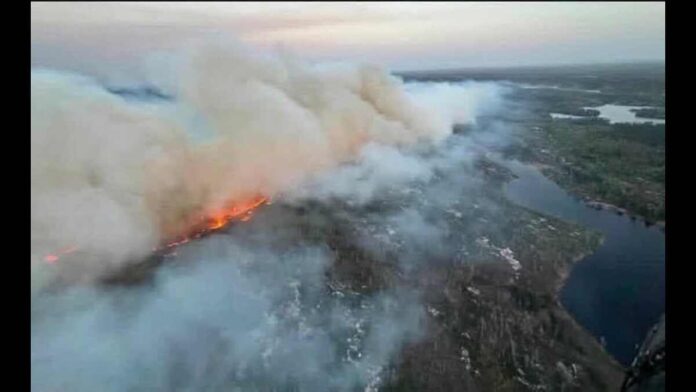


As more research labs and increasingly charred terrains emerge, researchers are rushing to catch up with the silent effects of the smoke of wildfires on public health. All that was once a simple annoyance the seasons’ bane has now become one of the greatest yet least studied environmental dangers of the century. The billowing airprits moving continent by continent carry deadlier contents than smoke alone; downsized particles and hazardous chemicals that penetrate, dig deep into the lungs, bloodstream and painfully record their destructive history. It is a problem that cannot be ignored anymore. Researchers are estimating that fires from aboveground biomass burning are responsible for more than a million excess deaths globally each year. For the US alone, long-term fine particle (PM 2.
5) air pollution attributable to wildfires is estimated at about 24,000 annual deaths. Recent seasons’ Canadian wildfire smoke traveled southward and was linked to some dozens of thousand excess dead even far away from the fires. But, the abnormal thing about now is the magnitude of such. Longer fire season, hotter temperatures, and increased density of development on the wildland-urban interface impart more people breathing polluted air in more days of each year. Scientists are learning that wildfire smoke is more than just a different kind of pollution. The particles it contains seem In particular damagingsometimes up to ten times as damaging as traffic or industrial pollution for some short-term lung effects.
When fires reach neighborhoods, these particles also transport a complex mixture of chemicals found in burning vegetation as well as plastics and house hold products. Inhaled, they ignite the internal fire, make the heart work overtime and cause lung impairment in hours. Emergency rooms report dramatic increases in asthma rates, heart attacks and out of range laboratory chemistries the days following major smoke events. Some of these laboratory chemistries remain elevated for months, implying that body is responding long after the sky appears to clear. Special considerations apply to pregnant women and developing children. Recent research finds that the exceedance of vehicle-related pollution over the last fifty years in some parts of the United States has been outstripped by the rise in exposure to wildfire smoke.
The airborne particles can impair fetal growth, increase the risks of preterm birth and low birth weight, and the early disadvantages can be translated into lifetime negative health outcomes in the form of chronic and respiratory disease. Researchers chronicle these trends as systematically eroding the benefits to public health obtained from cleaner automobiles and more stringent factory standards. The difficulty for researchers lies in the complexity of the exposure.
The make-up of the smoke varies based on what is burning, the temperature of the fire and how long the plume remains in the vicinity. Monitoring stations are absent in numerous locations and individuals whiled away most of their time indoors where the outdoor data is not necessarily representative of the dose. Long-term consequences are even more elusive; there are indications that inhaling smoke frequently can bring some types of cancer, neurological disorders and increased mortality long after the event but the processes that lead to this and the demographic groups most vulnerable are not quite clear.