
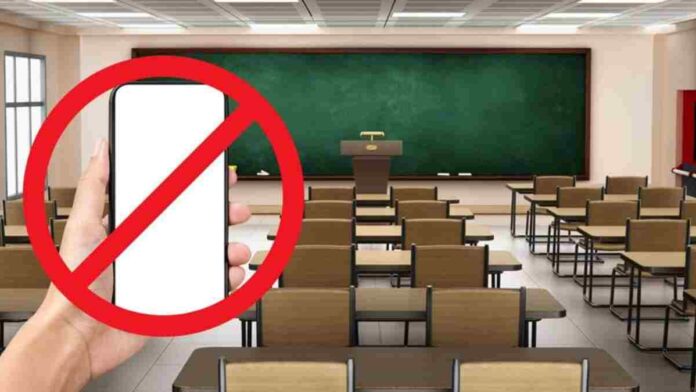


Mexico is making a bold move to remove personal screens from schools. On Tuesday the country’s government announced school-wide regulations that will ban cellphones and tablets use among children in primary and secondary school from first to last bell. The policy will be implemented beginning November 3, and will be in place throughout the entire public school day, including recess.
President Sheinbaum said the agreement had been approved by state education authorities. Restoring creativity and limiting the indiscriminate use of screens, mostly social media tools that can have an impact on children’s development is the aim of this measure”, she said. Education Minister Mario Delgado described the agreement as “an essential stride in the protection and the safeguarding of the rights of children and adolescents, prioritized in the activity of strengthening learning; mental health; learning;, development; attention; human interaction and coexistence.
With these regulations, the use of cell phones in basic schools are by students from the lower primary to the middle school will no longer be permitted during class time or break periods. Cell phones or other electronic devices can be used only when teachers request for students to bring them for a specific educational activity, which they will direct. There will be exemption for the use of the device by students with special needs and conditions. Senior high schools will be free to decide how they use the devices to engender responsible use. Universities are urged to promote good standards of digital citizenship based on values and ethics.
This policy has come at a time when there is mounting global anxiety about the impact of long hours in front of screens on young lives. Mexico is the latest in an expanding queue of nations who have concluded more explicit limits are needed. An extensive state report of over 500,000 teachers recently revealed issues with attention, recall, and problem solving due to overexposure to gadgets. Officials are expecting the curtailment to foster opportunities for in-person interaction, concentrated work and the type of unscripted games that develop social competence.
School assemblies will be the first step of implementation. This week the Ministry of education is scheduled to hold meetings with families, guardians, and teachers to clarify the reform, raise questions and establish local customs. The publication in the official gazette does not include a catalogue of sanctions but stresses a preventive, formative approach supported in the shared responsibility of families, schools, and students: schools should design practicable routines like taking away cell-phones at the beginning of the school day or creating safe storage spaces.
Both critics and supporters agree that Mexico is different. While it’s true that only thirty percent of public schools have computers connected to the internet, cellular phones have been a common research and communication prop. The new regulations are an effort to maintain that semblance while at the same time taking away that tempting distraction of instant messaging. Parents groups have been generally supportive, though many point out that the regulation isn’t the silver bullet solution.
The teachers see the change as an opportunity to regain the focus on the class that has been eroded by notifications and quick videos.