
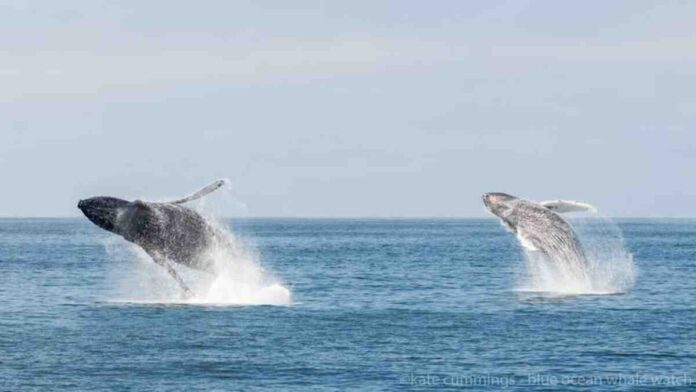


Gray whales are venturing into San Francisco Bay in growing numbers, a behavior that has marine biologists and wildlife experts deeply concerned about the animals’ survival. What was once a rare sighting has become more frequent in recent months, with multiple whales documented swimming through the bay’s waters, sometimes lingering for days near urban shorelines and busy shipping channels.
Researchers from the Oceanic Society and local marine mammal rescue groups report that at least a dozen gray whales have entered the bay since the start of 2026, with several individuals showing signs of poor body condition. Some appear unusually thin, a worrying indicator during their northward migration from breeding grounds in Mexico to feeding areas in the Arctic. Scientists suspect that changing ocean conditions, including shifts in prey availability due to warming waters and climate impacts, may be pushing the whales closer to shore and into unfamiliar territories in search of food.
San Francisco Bay presents unique dangers for these massive marine mammals. The shallow waters, heavy boat traffic, and underwater noise from shipping and ferries can disorient whales and increase the risk of ship strikes. Entanglement in fishing gear or crab pot lines remains another serious threat, as does exposure to pollutants and potential collisions with large vessels navigating the narrow Golden Gate entrance.
One recent case involved a young gray whale spotted repeatedly near the Bay Bridge, appearing lethargic and underweight. Rescue teams monitored the animal closely but faced challenges in intervening due to the busy urban environment. Tragically, several whales that entered the bay in previous seasons did not survive, with necropsies revealing malnutrition and signs of chronic stress as contributing factors.
The eastern North Pacific gray whale population, once celebrated for its remarkable recovery from near extinction, has faced renewed challenges in recent years. Unusual mortality events linked to starvation, environmental changes, and human activities have raised alarms among conservationists. The increased bay intrusions could signal broader ecosystem disruptions affecting the species’ traditional migration routes and foraging success.
Marine biologists are now intensifying monitoring efforts using drones, acoustic sensors, and citizen science reports to track whale movements in real time. They urge boaters and residents to maintain safe distances, reduce speed in known whale areas, and report any sightings immediately to authorities. Public awareness campaigns highlight simple actions that can help protect these gentle giants during their vulnerable time in coastal waters.
Experts emphasize that while occasional bay visits have occurred historically, the recent uptick combined with visible health concerns points to a troubling pattern. Continued research into ocean health, prey distribution, and climate influences will be crucial to understanding and mitigating the risks facing gray whales.
As these majestic creatures draw closer to human-populated areas, their presence serves as a stark reminder of the interconnectedness between marine ecosystems and coastal communities. Protecting gray whales requires coordinated efforts from scientists, government agencies, fishermen, and the public to ensure safer passage and healthier oceans for future generations.
The situation in San Francisco Bay underscores the urgent need for adaptive conservation strategies in a rapidly changing marine environment. With each whale that enters the bay, the stakes grow higher for a species already navigating significant survival pressures. Ongoing vigilance and science-based interventions offer the best hope for reversing this concerning trend and securing a stable future for one of the ocean’s most iconic travelers.