


2026 is rapidly shaping up to be one of the most momentous years in space exploration history, with a wave of missions and scientific breakthroughs that promise to broaden our understanding of the cosmos and push the boundaries of what humanity can achieve beyond Earth’s orbit. From groundbreaking planetary science to historic human spaceflight milestones and advanced robotic explorers, this year marks a pivotal shift in how the world explores space — both scientifically and collaboratively on a global scale.
A central highlight of the year is Artemis II, NASA’s bold return to crewed deep space missions. Scheduled for launch on March 6, 2026, Artemis II will send four astronauts — including three Americans and one Canadian — on a 10-day journey around the Moon, marking the first time humans have traveled beyond low Earth orbit since 1972. This mission is part of NASA’s larger Artemis program designed to eventually return astronauts to the lunar surface and lay the groundwork for future human missions to Mars.
Robotic missions are equally poised to transform scientific discovery this year. Europe’s Hera spacecraft is on track to reach the binary asteroid system (65803) Didymos in late 2026, starting a detailed investigation of the aftermath of NASA’s DART planetary defense test. Hera’s close-up observations will help scientists better understand asteroid compositions, internal structure and the long-term effects of kinetic impact mitigation strategies — essential for protecting Earth from future asteroid threats.
Meanwhile, orbital exploration continues to expand with international participation. Japan’s Martian Moons eXploration (MMX) mission is set to launch in 2026 with the goal of collecting and returning the first ever samples from Mars’s moon Phobos, offering unprecedented insights into the origins of the Martian system and the nature of small celestial bodies.
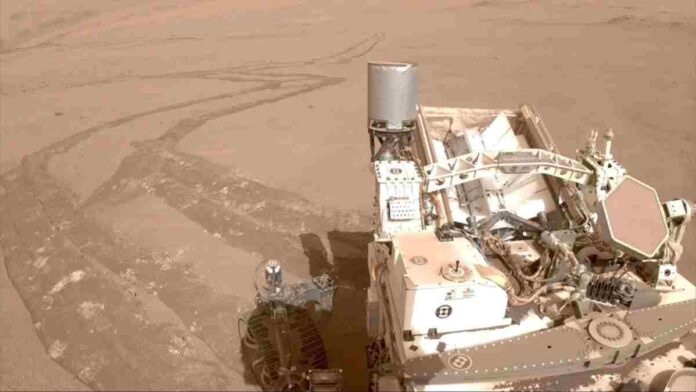
Beyond human and destination-targeted missions, robotic science advances on Mars itself continue to contribute significant discoveries. NASA’s Perseverance rover has been equipped with a new autonomous navigation “GPS-like” system, empowering it to traverse the Martian surface more efficiently and explore further than ever before without direct real-time guidance from Earth. This enhancement represents a meaningful step toward autonomous exploration, a capability crucial for future surface operations on Mars and other worlds.
The year also brings remarkable astronomical science achievements. The James Webb Space Telescope has recently made headlines by mapping auroras on Uranus in 3D — a first for any telescope and a major leap forward in understanding the magnetic environments of ice giants. Such observations help scientists refine models of planetary atmospheres and inform future exoplanet research.
Space agencies around the world are also continuing to extend and deepen their missions. The Emirates Mars Mission (Hope Probe) has been extended through 2028, allowing the UAE to gather more long-term data on the Martian atmosphere and climate, further cementing its role in global space science.
These advances are part of a larger pattern of international activity — with missions from NASA, ESA, JAXA, China and others exploring the Moon, asteroids, Mars and beyond, while powerful new telescopes and observatories prepare to map galaxies and search for habitable worlds. Together, this constellation of missions reflects an era of unprecedented cooperation and competition in space exploration, pushing humanity’s scientific reach farther than ever before.
As 2026 continues, these missions and discoveries promise to reshape our understanding of the cosmos, drive technological innovation, and inspire a new generation of scientists, engineers, and explorers worldwide. With historic crewed lunar voyages, advanced autonomous rovers, deep-space telescopes and interplanetary sample returns all on the horizon, this year may prove to be a turning point in how humanity explores and understands the universe we inhabit.