

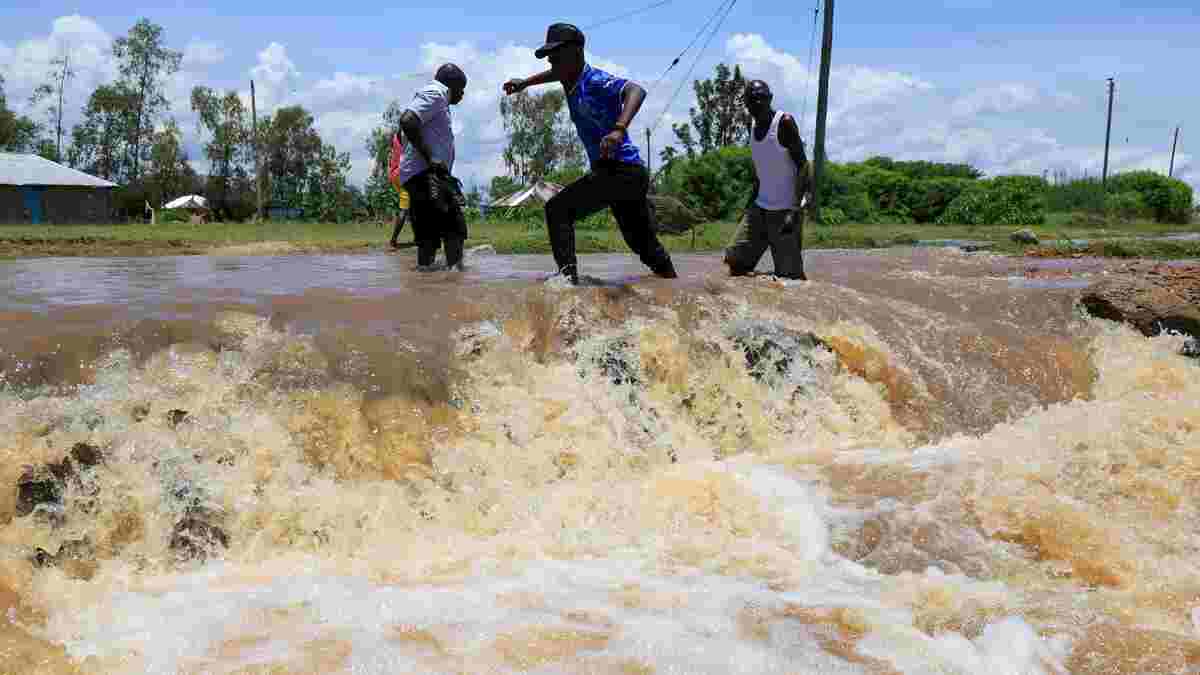
The devastating floods sweeping across Kenya in March 2026 have rapidly evolved into one of the most alarming humanitarian crises in Africa this year. Triggered by intense and prolonged rainfall, the disaster has submerged entire communities, displaced tens of thousands of people, and exposed the growing impact of climate change on vulnerable regions.
What began as seasonal heavy rains quickly escalated into widespread flooding after major rivers, including the Nyando and Tana, burst their banks. Entire مناطق in western Kenya and the capital Nairobi have been inundated, with roads, homes, and farmlands disappearing under rising water levels. Transport routes have been severely disrupted, and key infrastructure, including bridges and highways, has been damaged or rendered unusable.
The human toll continues to rise as rescue teams struggle to keep up with the scale of destruction. Recent reports indicate that the death toll has crossed 80, while tens of thousands of people have been displaced from their homes. Over 21 counties across the country have been affected, turning what was initially a regional disaster into a nationwide emergency.
In Nairobi, the situation has been particularly severe. Flash floods struck the city overnight, sweeping away vehicles, flooding residential neighborhoods, and even disrupting operations at the country’s main international airport. Many victims lost their lives due to drowning or electrocution as power lines collapsed into floodwaters. Emergency responders, including military units, have been deployed to conduct rescue missions and provide immediate relief.
Beyond the immediate destruction, the crisis is rapidly evolving into a long-term humanitarian challenge. Thousands of families are now living in temporary shelters such as schools and public buildings, with limited access to clean water, food, and healthcare. Aid agencies are warning of increased risks of waterborne diseases like cholera and malaria, as stagnant floodwaters create dangerous living conditions.
Agriculture, a backbone of Kenya’s economy, has also been heavily impacted. Floodwaters have destroyed vast areas of farmland, threatening food security in the coming months. In regions like Tana River County, entire crops have been wiped out, leaving farmers without income and increasing dependence on humanitarian aid.
What makes this crisis even more concerning is its connection to broader climate patterns. Experts have pointed out that extreme weather events in East Africa are becoming more frequent and intense. Kenya is currently facing a “double crisis” of both floods and drought, highlighting the unpredictable nature of climate change. While some regions are underwater, others are battling severe water shortages, creating a complex humanitarian situation.
The Kenyan government has initiated a multi-agency response, distributing emergency food supplies and coordinating rescue operations across affected areas. President William Ruto has pledged support for affected families, including covering medical expenses and accelerating relief efforts. However, the scale of the disaster has stretched resources thin, and international assistance is becoming increasingly critical.
Humanitarian organizations, including the Red Cross and global aid agencies, are stepping in to provide emergency relief, but challenges remain. Poor urban planning, inadequate drainage systems, and settlements in flood-prone areas have worsened the impact, particularly in densely populated regions like Nairobi.
As the rains continue, authorities warn that the situation could deteriorate further. With thousands already displaced and infrastructure severely damaged, recovery will take months, if not years. The Kenya floods of 2026 are not just a natural disaster but a stark reminder of the urgent need for climate resilience, better urban planning, and stronger disaster preparedness worldwide.
This unfolding crisis is capturing global attention, not only for its scale but also for what it represents. It signals a future where extreme weather events may become the norm rather than the exception, forcing nations to rethink how they prepare for and respond to such disasters.


